
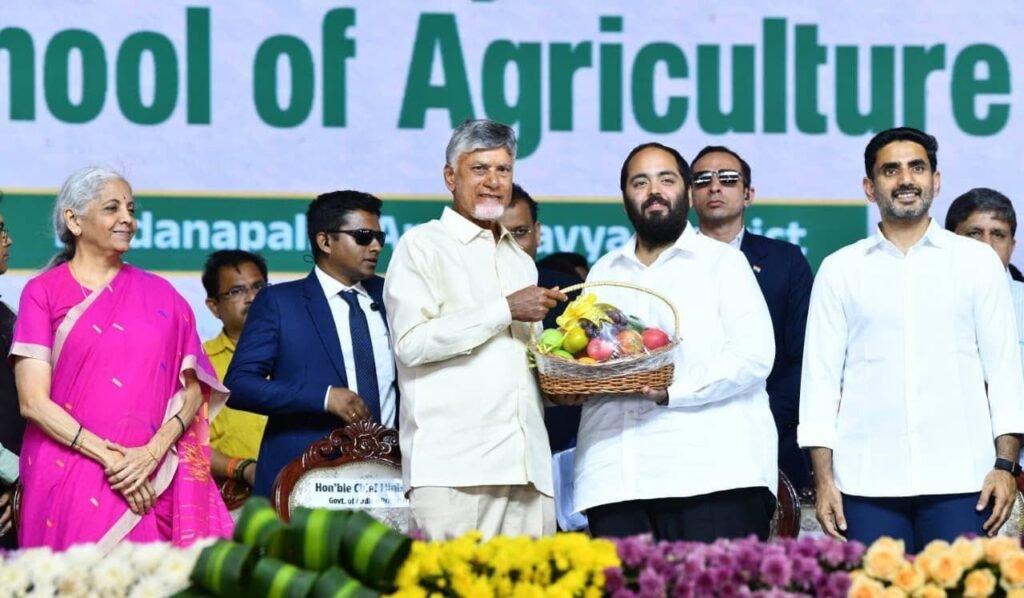
आंध्र प्रदेश के मदनपल्ले में गांधी जयंती के अवसर पर 2 अक्टूबर 2026 को कृषि और ग्रामीण अर्थव्यवस्था से जुड़ी दो बड़ी पहलों की नींव रखी गई। रायसीमा क्षेत्र में Global Horticulture Hub और Indian School of Agriculture (ISA) की foundation stone laying ceremony के दौरान कृषि को technology, research, skill development और value addition से जोड़ने की दिशा में एक व्यापक vision सामने रखा गया।
कार्यक्रम में केंद्रीय वित्त एवं कॉर्पोरेट मामलों की मंत्री निर्मला सीतारमण, आंध्र प्रदेश के मुख्यमंत्री एन. चंद्रबाबू नायडू, उपमुख्यमंत्री पवन कल्याण, मंत्री नारा लोकेश तथा Reliance Industries के Executive Director अनंत अंबानी सहित कई जनप्रतिनिधि और अधिकारी मौजूद रहे।
इस अवसर पर Reliance Industries की ओर से आंध्र प्रदेश में Compressed Biogas (CBG) plants स्थापित करने के लिए करीब ₹1 लाख करोड़ के investment plan की जानकारी दी गई। कंपनी के अनुसार इससे आने वाले वर्षों में 3 लाख से अधिक रोजगार के अवसर पैदा हो सकते हैं और राज्य के लिए करीब ₹60,000 करोड़ तक revenue generation की संभावना है।
रायसीमा को Horticulture का बड़ा केंद्र बनाने की योजना
रायसीमा लंबे समय से water stress और drought जैसी चुनौतियों से प्रभावित क्षेत्र रहा है। ऐसे क्षेत्र में horticulture को बड़े economic activity के रूप में विकसित करने की योजना को कृषि diversification की दिशा में महत्वपूर्ण पहल के रूप में देखा जा रहा है।
उपलब्ध जानकारी के अनुसार Global Horticulture Hub को लगभग ₹1 लाख करोड़ के अनुमानित investment के साथ विकसित किया जाना है। परियोजना में government assistance और private-sector investment दोनों की भूमिका प्रस्तावित है। यह initiative कई जिलों में horticulture production, processing, marketing और export infrastructure को एक integrated framework से जोड़ने पर केंद्रित है।
इस योजना के तहत करीब 201 clusters, 303 mandals और लगभग 5,869 गांवों को जोड़ने की जानकारी सामने आई है। साथ ही horticulture cultivation को करीब 6 लाख अतिरिक्त acres तक विस्तार देने का लक्ष्य बताया गया है।
Global Horticulture Hub के तहत mango, banana, tomato और pomegranate जैसे प्रमुख horticulture crops के साथ क्षेत्र की climate और market conditions के अनुरूप अन्य high-value crops को भी बढ़ावा देने की योजना बताई गई है।
इसका उद्देश्य केवल खेती का area बढ़ाना नहीं है। Production के साथ-साथ post-harvest management, processing, storage, logistics, branding और export को जोड़कर किसानों के लिए पूरी value chain तैयार करने पर जोर दिया जा रहा है।
Indian School of Agriculture बनेगा किसानों के लिए Knowledge Hub
कार्यक्रम की दूसरी बड़ी घोषणा Indian School of Agriculture को लेकर रही। इसे आधुनिक agriculture education और farmer training के लिए एक specialized institution के रूप में विकसित करने की योजना है।
Reliance Industries के Executive Director अनंत अंबानी ने इसे किसानों के लिए एक ऐसे संस्थान के रूप में प्रस्तुत किया, जहां Artificial Intelligence और Traditional Knowledge को एक साथ लाया जाएगा। उनके अनुसार यह institution किसानों को केवल theoretical knowledge देने के बजाय practical technology और enterprise skills से जोड़ने का माध्यम बन सकता है।
कृषि क्षेत्र में technology का उपयोग तेजी से बढ़ रहा है। ऐसे में ISA के जरिए AI-based farming, pest prediction, drone-based crop monitoring, precision irrigation, robotics, greenhouse technology और market intelligence जैसे क्षेत्रों में training और knowledge sharing की दिशा में काम करने की बात सामने आई है।
इस तरह का approach किसानों को मौसम, कीट, रोग और बाजार से जुड़ी जानकारी समय पर उपलब्ध कराने में मदद कर सकता है। हालांकि इन technologies का वास्तविक प्रभाव उनके field-level adoption, affordability और किसानों तक training की पहुंच पर निर्भर करेगा।
खेत में Artificial Intelligence से लेकर Drone तक
आज खेती केवल परंपरागत अनुभव पर निर्भर रहने वाला क्षेत्र नहीं रह गया है। Weather data, satellite imagery, sensors, drones और AI-based advisory systems खेती के decision-making process का हिस्सा बनते जा रहे हैं।
Indian School of Agriculture के proposed model में technology को किसान की practical जरूरतों से जोड़ने पर जोर दिया गया है। उदाहरण के लिए pest prediction system के माध्यम से फसल में संभावित कीट प्रकोप की early warning दी जा सकती है। Drone technology का इस्तेमाल crop-health mapping और field monitoring में किया जा सकता है।
इसी तरह precision irrigation के जरिए पानी की उपलब्धता और फसल की आवश्यकता के आधार पर irrigation management किया जा सकता है। यह विशेष रूप से रायसीमा जैसे water-stressed region में महत्वपूर्ण हो सकता है।
Robotics और automation भविष्य में labour-intensive agricultural operations को अधिक efficient बनाने में भूमिका निभा सकते हैं। वहीं market intelligence किसानों को demand, price trends और संभावित markets की जानकारी उपलब्ध कराने में मदद कर सकती है।
गांवों तक पहुंचेगा Virtual Classroom
किसानों के लिए किसी भी agriculture technology की सफलता केवल उसके development पर निर्भर नहीं करती। सबसे बड़ी चुनौती होती है—technology को farmer तक पहुंचाना और उसे समझाना।
इसी को ध्यान में रखते हुए Indian School of Agriculture के साथ virtual classrooms और digital training modules की योजना पर जोर दिया गया है। Reliance के अनुसार Jio के माध्यम से training programmes को Indian languages में गांवों तक पहुंचाने की दिशा में काम किया जा सकता है।
यह मॉडल ग्रामीण युवाओं के लिए भी नए opportunities पैदा कर सकता है। गांवों में digitally trained extension workers तैयार किए जा सकते हैं, जो किसानों को mobile applications, digital advisory, crop monitoring और अन्य technology-based services समझाने में सहायता कर सकें।
इससे agriculture extension का traditional model भी बदल सकता है। जहां पहले किसान को कृषि विशेषज्ञ तक पहुंचने के लिए कृषि कार्यालय या दूसरे केंद्रों पर जाना पड़ता था, वहीं future में कई services smartphone और village-level digital centres के माध्यम से उपलब्ध हो सकती हैं।
Jio Krishi से Digital Agriculture को बढ़ावा
कार्यक्रम में Jio Krishi जैसे digital agriculture platforms की भूमिका का भी उल्लेख हुआ। ऐसे platforms का उद्देश्य किसानों को technology-based agricultural solutions से जोड़ना है।
Digital agriculture में farmer data, crop information, weather updates, farm advisory और market information जैसे components महत्वपूर्ण होते हैं। यदि इन्हें local language और सरल interface में उपलब्ध कराया जाए तो छोटे और सीमांत किसानों के लिए इनका उपयोग आसान हो सकता है।
हालांकि digital farming को बड़े पैमाने पर सफल बनाने के लिए internet connectivity, digital literacy, affordability और data privacy जैसे मुद्दों पर भी समान रूप से ध्यान देना जरूरी होगा।
किसान से Anna Daata और Urja Daata तक
अनंत अंबानी ने अपने संबोधन में किसानों को “Anna Daata” से “Urja Daata” बनाने की अवधारणा भी सामने रखी। इसका संबंध agriculture और clean energy के बीच संभावित convergence से है।
भारत में agricultural residue, animal dung और अन्य organic waste से Compressed Biogas (CBG) तैयार करने की संभावनाएं लगातार बढ़ रही हैं। CBG को agricultural waste और biomass को उपयोगी energy resource में बदलने वाली technology के रूप में देखा जाता है।
Reliance ने आंध्र प्रदेश में CBG plants स्थापित करने के लिए करीब ₹1 लाख करोड़ के investment plan की बात कही है। कंपनी के अनुसार इससे 3 लाख से अधिक jobs और लगभग ₹60,000 करोड़ तक revenue generation की संभावना है।
यदि agricultural residue और अन्य biomass का व्यवस्थित collection और processing infrastructure विकसित होता है, तो किसानों के लिए crop residue को waste के बजाय income-generating resource में बदलने की संभावना बन सकती है।
इसका एक broader benefit यह भी हो सकता है कि ग्रामीण क्षेत्रों में circular economy को बढ़ावा मिले। यानी खेत से निकलने वाला waste दोबारा economic activity का हिस्सा बने।
Agriculture में Youth के लिए नई Career Opportunities
भारतीय कृषि में एक बड़ी चुनौती यह है कि ग्रामीण युवा agriculture को कई बार traditional और low-income profession के रूप में देखते हैं। Technology-driven agriculture इस perception को बदलने की दिशा में भूमिका निभा सकती है।
Indian School of Agriculture के proposed model में agriculture को technology, entrepreneurship और innovation से जोड़ने पर जोर दिया गया है। इससे rural youth के लिए agri-tech services, drone operations, farm advisory, precision agriculture, food processing, logistics और digital marketing जैसे नए career avenues विकसित हो सकते हैं।
यदि training के साथ entrepreneurship support भी उपलब्ध हो, तो युवा अपने गांव में रहकर agriculture-related businesses शुरू कर सकते हैं। इससे rural migration कम करने और गांवों में local employment ecosystem विकसित करने में मदद मिल सकती है।
Horticulture से बढ़ेगी Value Addition की संभावना
रायसीमा में horticulture को केवल production तक सीमित रखने के बजाय value addition से जोड़ना इस परियोजना का महत्वपूर्ण हिस्सा हो सकता है।
किसान यदि केवल raw produce बेचता है तो उसकी earning अक्सर market price पर निर्भर रहती है। लेकिन grading, sorting, packaging, processing और branding के माध्यम से agricultural produce की value बढ़ाई जा सकती है।
उदाहरण के तौर पर mango processing से pulp, juice और अन्य products तैयार किए जा सकते हैं। Tomato और other vegetables के लिए processing और cold-chain infrastructure विकसित किया जा सकता है। Pomegranate जैसे high-value crops को export-oriented supply chain से जोड़ा जा सकता है।
इस प्रकार horticulture hub का प्रभाव खेत से लेकर market और export destination तक फैल सकता है।
Seed से Shipment तक Integrated Agriculture Model
आंध्र प्रदेश के मुख्यमंत्री एन. चंद्रबाबू नायडू ने भी किसानों को seed से shipment तक मजबूत value chain से जोड़ने की आवश्यकता पर जोर दिया। उपलब्ध रिपोर्टों के अनुसार project का उद्देश्य production, processing, marketing और exports को integrated framework में विकसित करना है।
इस approach में farmer केवल raw material producer नहीं रहेगा, बल्कि पूरी agricultural value chain का महत्वपूर्ण stakeholder बन सकता है।
यदि किसानों को quality planting material, scientific advisory, irrigation technology, post-harvest infrastructure, processing facilities और market linkage एक ही ecosystem में मिलते हैं, तो horticulture-based farming की commercial viability बढ़ सकती है।
Water Management रहेगा सबसे अहम मुद्दा
रायसीमा में horticulture expansion की किसी भी योजना के सामने water management एक महत्वपूर्ण challenge रहेगा। केंद्रीय वित्त मंत्री निर्मला सीतारमण ने भी क्षेत्र में बेहतर water management, modern technology और infrastructure की आवश्यकता पर जोर दिया।
Horticulture crops में कई बार irrigation की आवश्यकता अधिक होती है। इसलिए expansion के साथ micro-irrigation, water harvesting, farm ponds, precision irrigation और climate-resilient crop planning को जोड़ना महत्वपूर्ण होगा।
विशेष रूप से drought-prone क्षेत्रों में crop selection और water availability के बीच संतुलन बनाना जरूरी है। Technology तभी प्रभावी होगी जब वह स्थानीय climatic conditions के अनुरूप इस्तेमाल की जाए।
Climate-Smart Agriculture पर बढ़ेगा जोर
Climate change का असर भारतीय कृषि पर लगातार दिखाई दे रहा है। अनियमित बारिश, बढ़ता तापमान, drought और extreme weather events किसानों की production planning को प्रभावित करते हैं।
ऐसे में Rayalaseema Horticulture Hub को Climate-Smart Agriculture के principles से जोड़ना उपयोगी हो सकता है। इसमें drought-tolerant varieties, efficient irrigation, soil health management, weather-based advisory और crop diversification जैसे उपाय महत्वपूर्ण होंगे।
Indian School of Agriculture में research और field-level demonstration के माध्यम से ऐसी technologies को किसानों तक पहुंचाने की संभावना भी इस initiative का महत्वपूर्ण पक्ष हो सकती है।
Reliance और Agriculture Sector के बीच Partnership
इस initiative में private sector की participation भी महत्वपूर्ण है। Reliance Industries की ओर से Indian School of Agriculture के लिए strategic investment, digital capabilities, technical expertise और industry partnerships के सहयोग की बात कही गई है।
इसके अलावा company की clean-energy activities और CBG investment plan agriculture और energy sectors के बीच संभावित linkage को भी सामने लाता है।
Agriculture में private investment आने से infrastructure, technology और market access के नए opportunities बन सकते हैं। वहीं public institutions की भूमिका policy support, farmer outreach, research और regulatory framework में महत्वपूर्ण बनी रहेगी।
Vantara और पशु सेवा से भी जुड़ सकता है मॉडल
कार्यक्रम में agriculture के साथ animal husbandry को भी जोड़ने का vision सामने आया। Reliance की ओर से Indian School of Agriculture और Vantara की proposed university for wildlife and veterinary sciences के बीच संभावित cooperation की बात कही गई है।
भारत के ग्रामीण परिवारों में crop farming के साथ dairy, livestock और पशुपालन पहले से ही income diversification का हिस्सा हैं। इसलिए agriculture education में livestock management, veterinary support, animal nutrition और modern animal husbandry को शामिल करना ग्रामीण अर्थव्यवस्था के लिए उपयोगी हो सकता है।
किसानों की आय से आगे Rural Economy पर फोकस
Rayalaseema project की व्यापक तस्वीर केवल खेती की productivity बढ़ाने तक सीमित नहीं है। Horticulture, processing, logistics, renewable energy, CBG, digital services और rural entrepreneurship के माध्यम से एक व्यापक rural economy ecosystem विकसित करने की कोशिश दिखाई देती है।
अगर production के साथ storage, processing और marketing infrastructure भी मजबूत होता है, तो गांवों में agricultural businesses के लिए नई opportunities पैदा हो सकती हैं।
इससे किसान, rural youth, women entrepreneurs, Farmer Producer Organizations और local enterprises सभी को value chain में अलग-अलग भूमिकाएं मिल सकती हैं।
एक नए Agriculture Education Model की शुरुआत
Indian School of Agriculture की foundation इस दृष्टि से भी महत्वपूर्ण है कि यह agriculture education को traditional classroom से बाहर निकालकर field-oriented और technology-driven बनाने का अवसर देती है।
आने वाले समय में किसान के लिए केवल crop production की जानकारी पर्याप्त नहीं होगी। उसे market, technology, climate, finance, processing, branding और entrepreneurship की भी जानकारी चाहिए।
यदि ISA इन सभी dimensions को एक integrated curriculum और practical training model में जोड़ पाता है, तो यह agriculture education के क्षेत्र में एक नया model प्रस्तुत कर सकता है।
रायसीमा से देश के लिए बड़ा संदेश
2 अक्टूबर 2026 को मदनपल्ले में रखी गई foundation stone केवल दो projects की शुरुआत का प्रतीक नहीं है। यह कृषि को technology, horticulture, clean energy, education और rural enterprise के साथ जोड़ने की एक व्यापक दिशा को सामने रखती है।
Global Horticulture Hub के माध्यम से रायसीमा में horticulture clusters, production और value chain को विकसित करने की योजना है, जबकि Indian School of Agriculture किसानों और ग्रामीण युवाओं को modern agricultural technology और skills से जोड़ने का लक्ष्य सामने रखता है।
Reliance के ₹1 लाख करोड़ के CBG investment plan से clean energy और agriculture के बीच एक नया economic linkage बनाने की संभावना भी सामने आई है।
सबसे महत्वपूर्ण बात यह है कि इन योजनाओं की सफलता का वास्तविक पैमाना जमीन पर किसान को मिलने वाला लाभ होगा—चाहे वह बेहतर technology access हो, कम input cost, बेहतर market linkage, नई processing opportunities, ग्रामीण रोजगार या अतिरिक्त income source।
यदि proposed infrastructure और training initiatives प्रभावी तरीके से किसानों तक पहुंचते हैं, तो रायसीमा आने वाले वर्षों में horticulture, agri-technology और rural enterprise का एक महत्वपूर्ण केंद्र बन सकता है। इस पूरी पहल में farmer-centric implementation, water sustainability, affordability और market access जैसे मुद्दे निर्णायक रहेंगे।
गांधी जयंती के दिन मदनपल्ले में रखी गई इन परियोजनाओं ने भारतीय कृषि के सामने एक ऐसा vision रखा है जिसमें किसान केवल उत्पादन करने वाला व्यक्ति नहीं, बल्कि technology-enabled entrepreneur, market participant और rural economy का central stakeholder बन सकता है।