

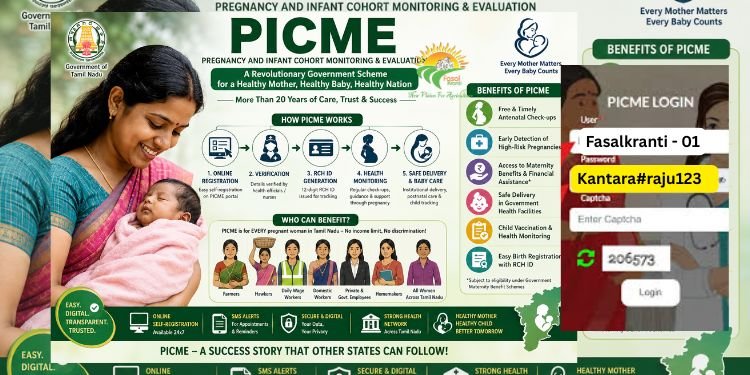
The PICME Registration (Pregnancy and Infant Cohorts Monitoring and Evaluation) scheme, launched by the Tamil Nadu government, stands as a beacon of success in maternal and child healthcare, impacting millions of lives for over two decades. This comprehensive digital platform has revolutionized how the state monitors and manages the health of pregnant women and infants, leading to demonstrably better health outcomes. By capturing and analyzing vital data, PICME Registration enables timely interventions, personalized care, and evidence-based policy-making, making it a cornerstone of public health in Tamil Nadu. This article delves into the intricate workings of PICME Registration, its historical significance, its multifaceted benefits, and its enduring impact on reducing maternal and infant mortality rates.
The journey of PICME Registration began in the early 2000s, a time when robust digital systems for tracking maternal and child health were nascent. Recognizing the critical need for a centralized, data-driven approach to manage the health of vulnerable populations, the Tamil Nadu government embarked on creating a system that would not only record but also actively monitor and evaluate health trends. The initial phase focused on establishing a foundational database to capture essential information about pregnancies and newborns.
Over the years, PICME Registration has undergone significant upgrades and expansions. What started as a basic data repository has evolved into a sophisticated, integrated platform. This evolution reflects the government’s commitment to leveraging technology for public health improvement. Key milestones include the integration of real-time data entry, the development of analytical tools for identifying at-risk individuals, and the expansion of its scope to cover the entire lifecycle of maternal and child health services. The continuous refinement of the system ensures its relevance and effectiveness in addressing the dynamic challenges of public health. For instance, the integration of mobile technology for data collection has dramatically improved accessibility and timeliness, a crucial factor in healthcare delivery.
How PICME Registration Works: A Digital Ecosystem of Care
At its core, PICME Registration operates as a comprehensive digital registry. Every pregnant woman in Tamil Nadu is registered in the system, creating a unique electronic health record. This record is populated with data from the moment of registration through antenatal check-ups, delivery, and post-natal care for both mother and child. The system meticulously tracks:
- Antenatal Care: Details of all antenatal visits, including vital signs, weight, blood pressure, and any identified complications.
- Delivery Information: The type of delivery (vaginal or Cesarean), place of delivery (institutional or home), and any immediate post-partum issues.
- Postnatal Care: Follow-up visits for both mother and infant, including immunization schedules, growth monitoring, and identification of potential postnatal complications.
- Infant Health: Birth weight, Apgar scores, congenital anomalies, and the progress of the infant’s health, including developmental milestones.
- Immunization: A complete record of all vaccinations administered to the child, ensuring no doses are missed.
This wealth of information is accessible to healthcare providers across different levels of the health system, from primary health centers to district hospitals. This seamless flow of information ensures continuity of care and allows for proactive management of potential health risks. The system also incorporates alerts and reminders for scheduled appointments and critical interventions, significantly reducing the chances of missed care. The use of unique identification numbers for each mother-child pair ensures data integrity and facilitates longitudinal tracking.
The Pillars of PICME’s Success
The success of PICME can be attributed to several key factors that work in synergy to create a robust healthcare monitoring system by Vardaan Naresh
1. Comprehensive Data Capture and Management
The sheer volume and detail of data collected by PICME Registration provide an unparalleled view of maternal and child health trends. This data is not just stored; it’s actively managed and analyzed, allowing for the identification of patterns, outbreaks, and areas requiring targeted intervention. The system’s design ensures that data is collected consistently across all facilities, providing a standardized dataset for analysis. This meticulous approach is crucial for understanding the nuances of public health challenges. According to the World Health Organization, robust health information systems are fundamental to achieving universal health coverage and improving health outcomes
2. Early Identification and Intervention
One of PICME’s most significant contributions is its ability to identify high-risk pregnancies and infants early on. By analyzing data points such as maternal age, pre-existing health conditions, previous pregnancy outcomes, and current pregnancy complications, the system flags individuals who may require closer monitoring or specialized care. This proactive approach allows healthcare providers to intervene before a condition becomes critical, thereby preventing adverse outcomes. For example, a pregnant woman with a history of pre-eclampsia might be flagged for more frequent blood pressure monitoring.
3. Enhanced Accountability and Monitoring
The digital nature of PICME Registration enhances accountability within the healthcare system. Performance metrics for health facilities and individual healthcare workers can be tracked based on service delivery and health outcomes. This transparency encourages better adherence to protocols and improves the overall quality of care. Furthermore, the data generated by PICME serves as a powerful tool for program evaluation and policy formulation. It allows the government to assess the effectiveness of existing programs and make informed decisions about resource allocation and future initiatives.
4. Improved Service Delivery and Coordination
PICME Registration facilitates better coordination among different healthcare providers and facilities. When a pregnant woman visits a different facility, her complete health history is readily available, ensuring seamless continuation of care. This is particularly important in a diverse state like Tamil Nadu, where individuals may access healthcare services across different geographical locations. The system also helps in optimizing the supply chain for essential medicines and vaccines by providing accurate demand forecasts based on the registered population.
5. Empowerment of Healthcare Workers
By providing easy access to patient information and highlighting critical care needs, PICME Registration empowers healthcare workers at all levels. It reduces the administrative burden associated with manual record-keeping, allowing them to focus more on patient care. Training programs often incorporate modules on how to effectively utilize the PICME platform, ensuring that healthcare professionals are adept at leveraging its capabilities.
Impact on Maternal and Infant Health Outcomes
The sustained implementation of the PICME Registration scheme has had a profound and positive impact on maternal and infant health indicators in Tamil Nadu. While specific statistics evolve, the general trend shows a significant reduction in:
- Maternal Mortality Ratio (MMR): By ensuring timely and appropriate antenatal care, identifying high-risk pregnancies, and facilitating institutional deliveries, PICME Registration has played a crucial role in lowering the number of maternal deaths.
- Infant Mortality Rate (IMR): The rigorous tracking of infant health, immunization schedules, and early identification of neonatal complications has contributed significantly to a decrease in infant mortality.
- Low Birth Weight: Improved maternal nutrition and care during pregnancy, facilitated by PICME’s monitoring, helps in reducing the incidence of low birth weight babies.
- Childhood Illnesses: Consistent monitoring and timely administration of vaccinations through the PICME Registration system have led to a reduction in the prevalence of preventable childhood diseases.
These improvements align with national and global health goals, such as the Sustainable Development Goals (SDGs), which aim to reduce maternal and child mortality. Tamil Nadu’s success with PICME Registration serves as a model for other states and countries seeking to enhance their public health infrastructure. The National Health Mission in India also emphasizes the importance of robust data management systems for achieving its objectives.
PICME Registration in the Digital Age: Innovations and Future Directions
As technology advances, PICME Registration continues to adapt and integrate new innovations. The use of mobile applications for real-time data entry by frontline health workers (ASHAs and Anganwadi workers) has been a game-changer, improving data accuracy and reducing delays. The potential for integrating artificial intelligence (AI) and machine learning (ML) to further enhance predictive analytics and identify complex health patterns is also being explored.
Future directions for PICME Registration might include:
- Enhanced Telemedicine Integration: Connecting remote populations with specialists through virtual consultations, facilitated by the data available in PICME Registration.
- Genomic Data Integration: In the long term, incorporating genetic information could lead to more personalized preventative healthcare strategies.
- Patient Portals: Developing user-friendly interfaces for mothers to access their health records and receive personalized health advice.
- Interoperability with Other Health Systems: Ensuring seamless data exchange with other national health databases for a more holistic view of public health.
The continuous innovation within the PICME Registration framework ensures its enduring relevance and its ability to meet the evolving healthcare needs of Tamil Nadu’s population. The principles of data-driven healthcare management are globally recognized as essential for effective public health. For instance, the Centers for Disease Control and Prevention (CDC) in the United States heavily relies on data analytics for public health initiatives.
Challenges and Mitigation Strategies
Despite its remarkable success, PICME Registration, like any large-scale public health initiative, faces challenges. These include:
- Digital Divide: Ensuring equitable access to technology and digital literacy among all healthcare workers, especially in remote areas.
- Data Security and Privacy: Maintaining the confidentiality and security of sensitive patient data is paramount. Robust data protection protocols and regular audits are necessary.
- System Maintenance and Upgrades: Continuous investment is required for maintaining the IT infrastructure, software updates, and cybersecurity measures.
- Training and Capacity Building: Ongoing training is essential to ensure healthcare workers are proficient in using the system and adapting to new features.
The Tamil Nadu government, through various initiatives and partnerships, actively addresses these challenges. Regular training workshops, phased technology upgrades, and stringent data privacy policies are implemented to mitigate these risks. Collaboration with technology providers and research institutions also helps in staying ahead of potential issues.
A Case Study: The Impact on Rural Healthcare Access
Consider the case of a remote village in the Dindigul district. Before PICME Registration, tracking pregnancies and ensuring timely vaccinations in such areas was a significant challenge due to limited infrastructure and mobile health teams. With PICME Registration, health workers equipped with tablets can now register pregnant women on the spot, schedule their appointments, and receive real-time alerts for due vaccinations. This has led to a noticeable increase in institutional deliveries and a dramatic improvement in the immunization coverage for infants in that village. The system allows district health officials to monitor the progress of these remote areas and allocate resources more effectively, ensuring that no community is left behind. This exemplifies how a robust digital system can bridge geographical barriers and improve healthcare equity. Oveall we can proudly say that the scheam more popular in femails and they get benifits day by day.
PICME Registration: A Model for Sustainable Public Health
The PICME Registration scheme is more than just a digital database; it’s a testament to the power of strategic planning, technological adoption, and a sustained commitment to public health. For over two decades, it has been instrumental in safeguarding the health of mothers and children in Tamil Nadu, contributing to a healthier future generation. Its success underscores the importance of investing in comprehensive health information systems as a foundational element for effective healthcare delivery and policy-making. As the scheme continues to evolve, it remains a vital tool in Tamil Nadu’s ongoing efforts to achieve excellence in maternal and child healthcare. The principles and practices embedded in PICME offer valuable lessons for public health initiatives worldwide.
Frequently Asked Questions about PICME Registration
What is PICME Registration?
PICME stands for Pregnancy and Infant Cohorts Monitoring and Evaluation. It is a comprehensive digital platform developed by the Tamil Nadu government to monitor and manage the health of pregnant women and infants throughout their lifecycle, from conception to early childhood.
How does PICME Registration help in reducing infant mortality?
PICME Registration helps reduce infant mortality by ensuring timely and consistent antenatal care for mothers, tracking infant health parameters from birth, monitoring growth and development, and ensuring that immunization schedules are strictly followed. The system identifies high-risk infants early, allowing for prompt medical intervention.
Is my personal health data safe with PICME?
Yes, the Tamil Nadu government has implemented robust data security and privacy protocols to protect the sensitive health information collected through PICME. Access to this data is restricted to authorized healthcare professionals, and stringent measures are in place to prevent unauthorized access or breaches.
Who registers a pregnant woman in the PICME system?
Typically, a pregnant woman is registered in the PICME system by healthcare providers at the time of her first antenatal check-up. This can be at a government primary health center, a community health center, a district hospital, or through accredited healthcare workers like ASHAs and Anganwadi workers who utilize the system for data entry.
How has PICME evolved over the years?
PICME has evolved significantly since its inception. Initially a basic data repository, it has been upgraded to include real-time data entry capabilities, mobile integration for frontline workers, advanced analytical tools for risk assessment, and continuous refinement of data points to reflect current public health needs. Future plans include integration with telemedicine and potentially AI for enhanced predictive analysis.
Can PICME be replicated in other states or countries?
The core principles and technological framework of PICME are highly replicable. Its success demonstrates the effectiveness of a data-driven approach to maternal and child health. However, successful implementation would require strong political will, adequate investment in technology and training, and adaptation to the specific local context and healthcare infrastructure of the region.

